 T.R. Maxwell
Who was Miriam, and why does her story matter? In the biblical account, Miriam is the sister of Moses and Aaron, a prophet who leads women in song after the Israelites cross the sea. Scripture also portrays her in a conflict with Moses and records her death during the journey through the wilderness.
Miriam Bible Study: Her Family and the Exodus
Numbers 26:59 names Miriam as the sister of Aaron and Moses and identifies their parents as Amram and Jochebed. Her family ties place her close to the central figures of the exodus, the story of Israel’s departure from Egypt. The passages that name her, however, give her a role of her own as well.
In Exodus 2:1–10, the infant Moses is placed in a basket among reeds by the river. His sister watches from a distance. When Pharaoh’s daughter finds the baby, the sister offers to find a Hebrew woman to nurse him and brings the child’s mother. The daughter accepts the arrangement, and the mother cares for him until he is older.
The sister is not named in that episode. Readers often identify her as Miriam because later passages name Miriam as Moses’ sister, but Exodus 2 itself calls her only the child’s sister. This distinction keeps the details of the early scene separate from the family information supplied later.
A Prophet Who Led a Song
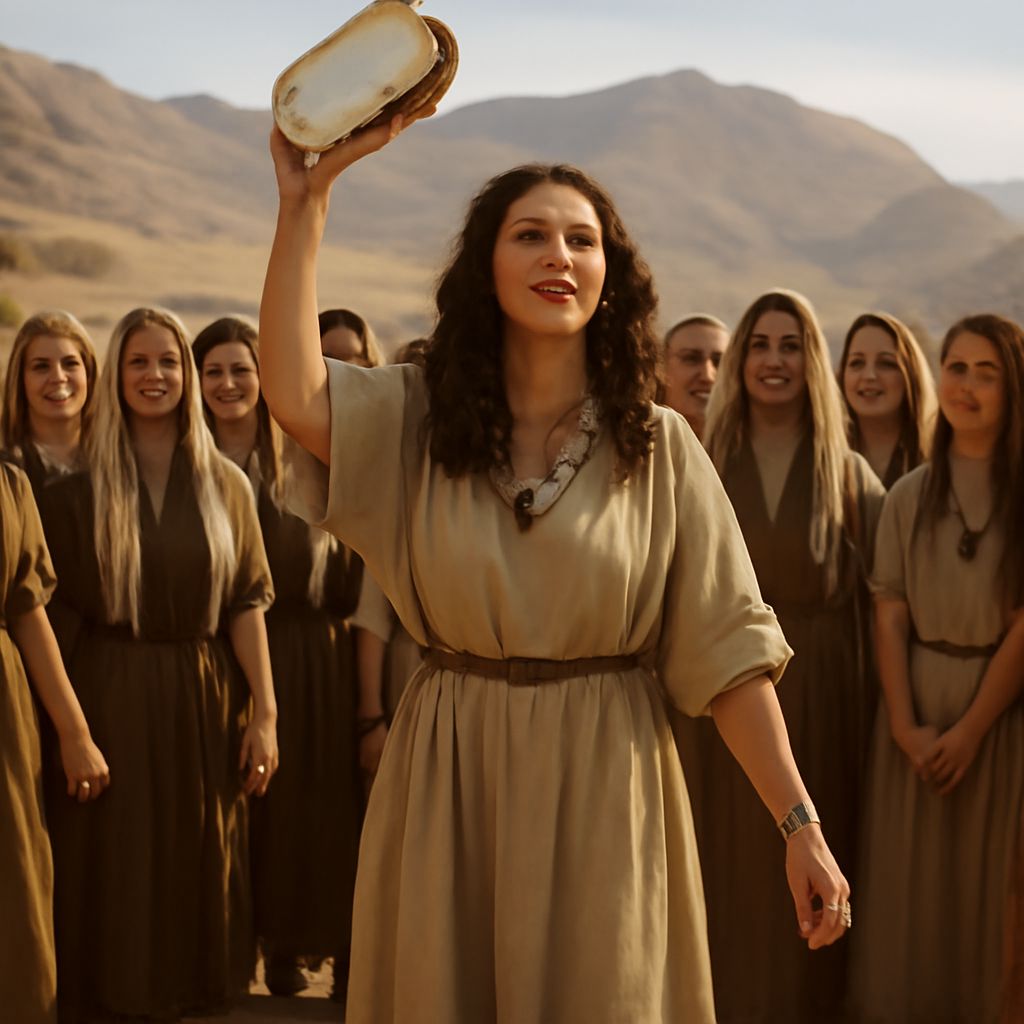
After the Israelites cross the sea and escape the pursuing Egyptians, Exodus 15:20–21 introduces Miriam by name as a prophet and Aaron’s sister. She takes a tambourine, and the women follow her with tambourines and dancing. Miriam leads them in a song celebrating the Lord’s victory over the horse and rider.
A prophet is a person associated with communicating a message from God. Here the title stands beside a visible act of leadership: Miriam takes up an instrument, and the women respond together. The brief scene gives the community’s deliverance a public expression in music and movement.
For a Miriam Bible study, the placement of this moment matters. It comes after the crossing, when the immediate danger has passed, and presents the women’s celebration as part of the larger response to that event. The passage does not describe all of Miriam’s work as a prophet; it shows one particular moment in which she leads.
The Dispute in Numbers 12
Miriam’s story in Scripture becomes more complicated in Numbers 12:1–15. Miriam and Aaron speak against Moses concerning his Cushite wife, and they question whether the Lord has spoken only through Moses. Their words raise the issue of authority among the three siblings.
God calls the three to the tent of meeting and explains Moses’ distinctive relationship with him. After God departs, Miriam’s skin becomes white with a severe disease. Aaron asks Moses to intercede, and Moses cries out to God for her healing. Miriam is shut outside the camp for seven days; the people wait until she is brought back before continuing their journey.
The chapter places Miriam and Aaron together in the complaint but describes Miriam as the one afflicted and excluded from camp. It also shows Moses responding to her distress with a plea for healing. Those details make the episode more than a simple record of disagreement: family, authority, punishment, and care are all present in the same short narrative.
Her Death and Place in the Story
Numbers 20:1 reports that Miriam died and was buried at Kadesh. The notice is brief, marking her death during the wilderness journey without describing a ceremony or supplying further details about her burial.
Who is Miriam in the Bible when these passages are read together? The biblical portrait of Miriam shows a member of Moses’ family, a named prophet, and a leader whose story includes both celebration and conflict. Micah 6:4 later recalls her alongside Moses and Aaron among those God sent to lead Israel out of Egypt.
That later remembrance helps explain her lasting place: Miriam is remembered as a leader alongside her brothers because the biblical texts name her among Israel’s guides and show her leading the women in song after the crossing.






Book of Life Bible References: What the Passages Mean
The Bible’s book of life appears in scenes of prayer, belonging, and judgment. Explore the key verses and see how their different contexts shape the image.