T.R. Maxwell
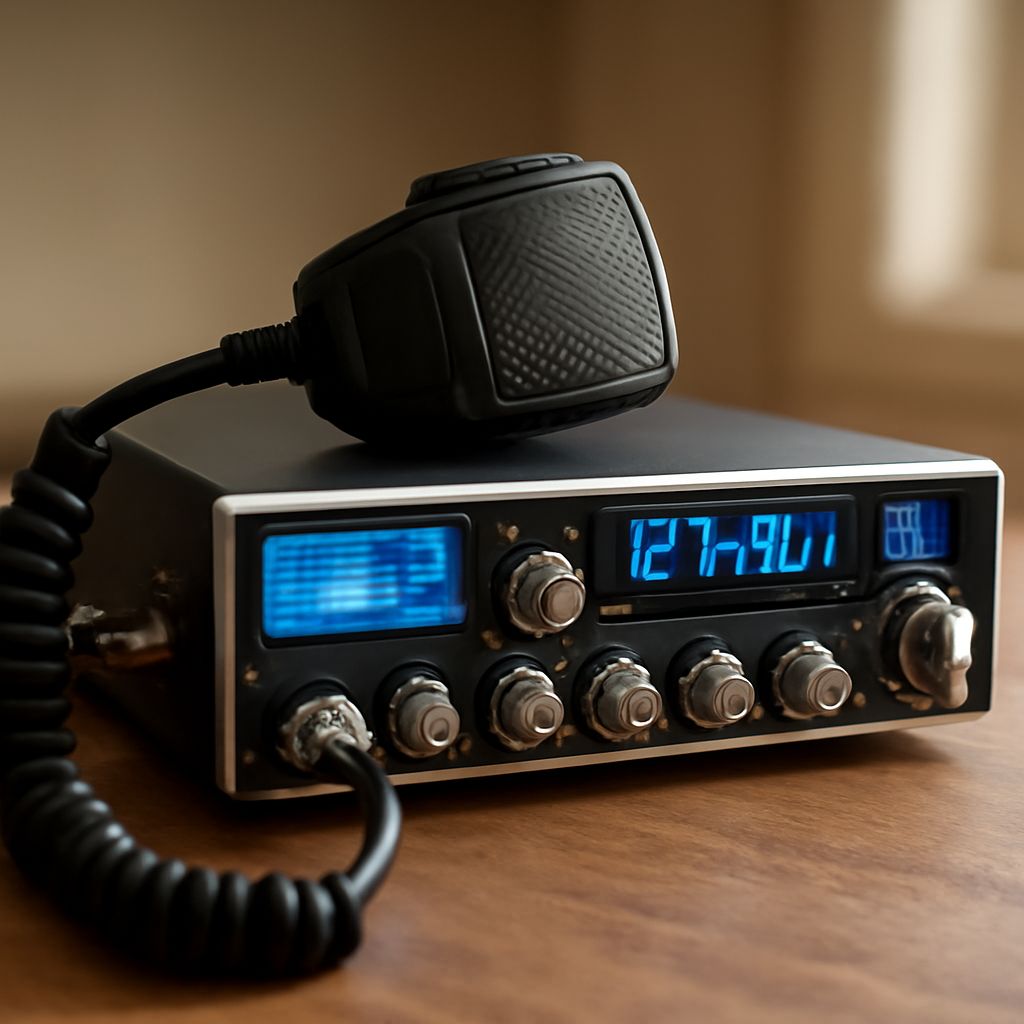
A CB radio depends on more than the box in the cab: its antenna, cable, mount, microphone, and power supply all contribute to the connection. A radio used in a truck works as a system, so a driver comparing equipment should consider the vehicle and the complete installation as well as the controls on the front panel.
Trucker Radio Components and Their Jobs
The radio receives and transmits on Citizens Band channels. A speaker plays incoming voices, and a microphone lets the operator speak when its push-to-talk button is held. Releasing the button returns the unit to listening. Volume controls the speaker, while squelch suppresses background noise between signals; setting squelch too high can also hide weaker calls.
A truck CB radio needs a compatible power source, usually a 12-volt DC vehicle supply for a mobile unit. Check the radio’s voltage, polarity, fuse, and wiring instructions against the vehicle before connecting it. Some installations use a suitable accessory outlet; others require a properly fused wired connection. A qualified installer can identify an appropriate supply point when the truck’s wiring is unfamiliar.
The antenna sends and receives the radio signal. Coaxial cable carries that signal between the radio and the antenna mount, and the mount holds the antenna securely on the vehicle. Connectors must fit at both ends, and the cable should reach without being pinched by a door, sharply bent, or exposed to moving parts.
Choosing a Compatible Kit
A cb radio kit may include the radio and microphone but leave the antenna, mount, or cable to be purchased separately. Before ordering, compare the package contents with the intended installation. Confirm that the antenna is designed for CB use and that its mount and cable connectors match the radio and one another.
A mounting bracket should fit the available space and hold the unit where its controls can be reached without obstructing the driver’s view or vehicle controls. Consider speaker placement too: a downward-facing speaker may be muffled if pressed against a surface. An external speaker can help if the chosen radio supports one and cab noise makes speech difficult to hear.
The truck’s construction also affects antenna choice. A conventional antenna installation may rely on a suitable metal ground plane and a properly grounded mount. A vehicle without the required metal surface may need an antenna system specifically designed for that situation. The antenna maker’s instructions should guide the choice; the Cobra CB overview explains why mounting and grounding matter.
Range and Antenna Setup
A listing for a long range cb radio cannot predict the distance between two particular vehicles. Terrain, buildings, antenna placement, electrical noise, and the other station’s setup all affect the result. A clear path and a well-installed antenna may improve communication, while hills or a poor connection can shorten it. The radio at the other end is part of the same conversation, so its antenna and location matter too.
A radio CB users can operate comfortably still needs an antenna system matched to the installation. Standing wave ratio, or SWR, is a measurement used to assess that match. An internal meter or a suitable external meter can be used according to the equipment instructions. Cobra’s installation guide describes checking the antenna after installation and adjusting it according to its maker’s directions.
Connect the antenna before transmitting. Cobra warns that prolonged transmission without a connected antenna or with a poorly matched one can damage the radio. If the reading is outside the equipment maker’s recommended range, stop transmitting and inspect the cable, connectors, mount, and antenna setup; an installer can help diagnose a persistent problem.
A Practical Check Before the Road
While parked, confirm that the radio powers on, the microphone is connected, and the speaker produces sound. With a second CB user on the same channel, test reception and a brief reply after the antenna system has been checked. Each person should be able to hear and understand the other. Follow the applicable FCC rules and the radio manufacturer’s instructions for operation.
If a trucker radio powers on but incoming voices are faint, first check volume and squelch, then inspect the antenna connection and cable. If voices are clear but a reply is not heard, check the microphone connection and ask whether the other user is on the same channel. These checks narrow the problem before replacing the equipment.